By SALES 1 | 22 May 2025 | 0 Comments
Structural Optimization in Metal Glasses: Solving Hinge Discoloration through Design
In the production of metal glasses, especially stainless steel glasses and titanium glasses, the connection structure between the temple arm and the end piece has always been an easily overlooked but extremely critical part.
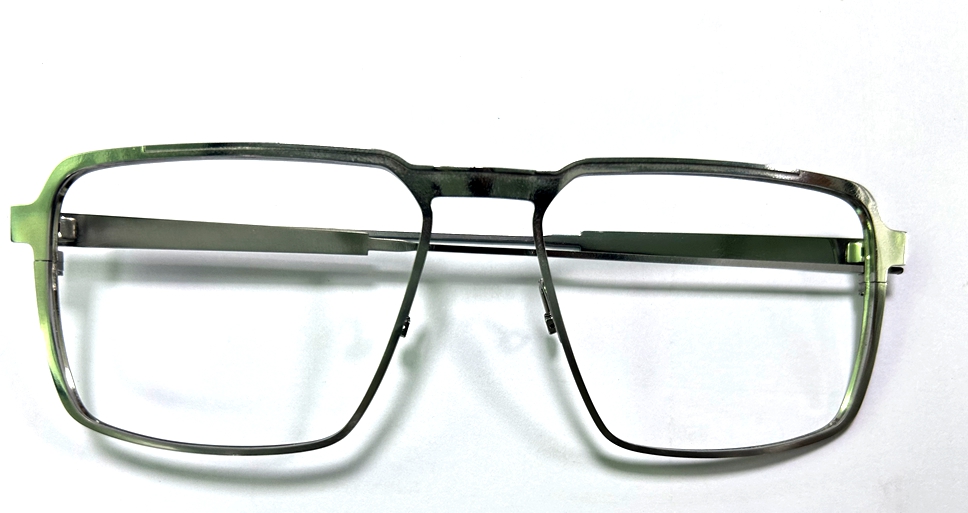
We have noticed in past large-scale shipments and customer feedback that when the hinges is opened and closed frequently, the part where the temple arm and the end piece meet is prone to discoloration, especially when the surface treatment is electroplating or spray painting.
This discoloration is mainly due to the tight fit of the structure, which causes repeated friction during each opening and closing process. We used to use traditional craftsmanship to "fit the two parts together tightly", which seemed solid, but after long-term use, this position would have slight paint loss or surface discoloration.
For this reason, we re-analyzed from the perspective of structural mechanics and wear, and began to try to keep a very small gap at the connection between the hinges and the end piece. The original intention of this design was not to weaken stability, but to establish a "buffer zone" between the two metal contact surfaces to effectively reduce the damage of mechanical friction to the surface treatment.
We also took comparison photos, and the change from the old structure to the new structure is very intuitive.
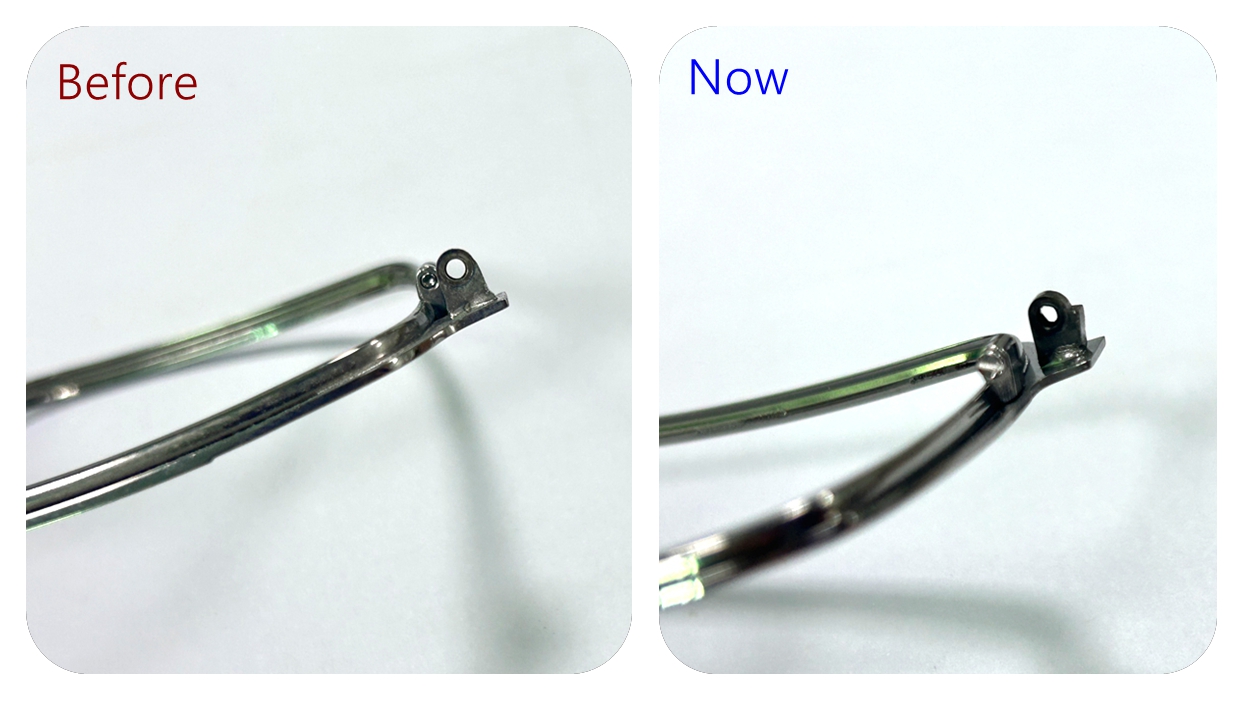
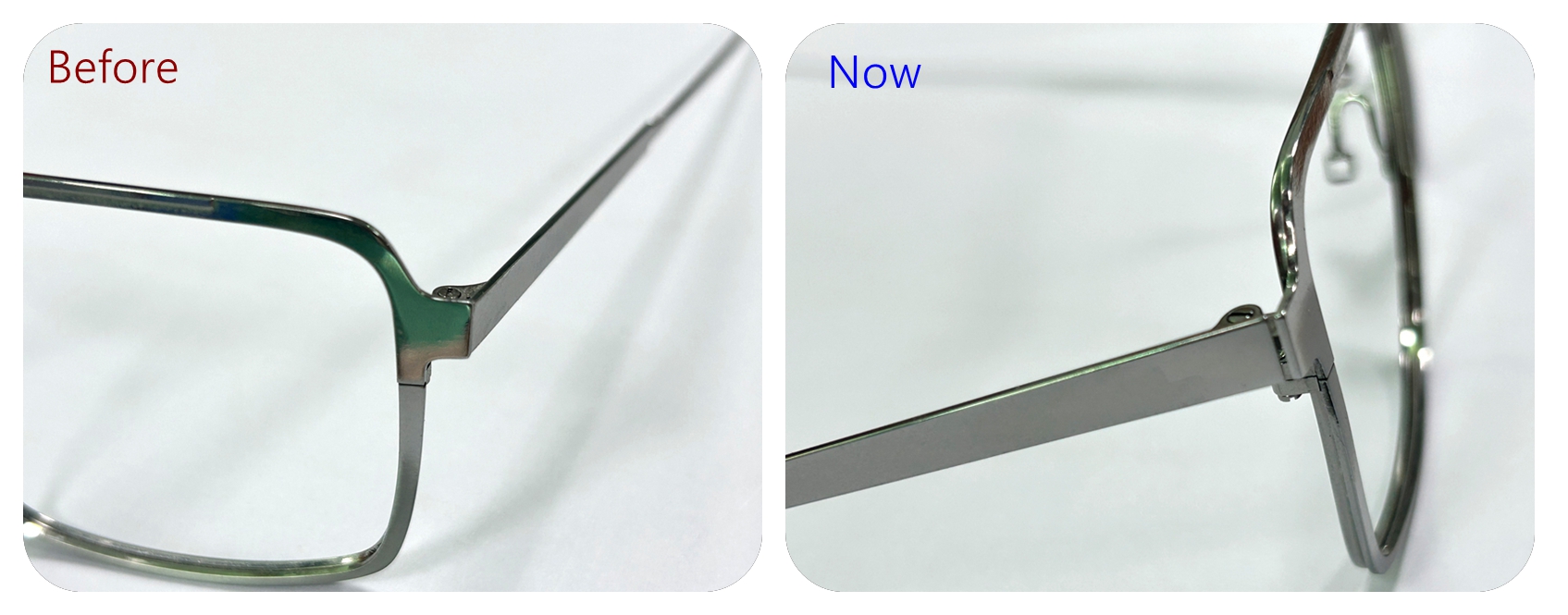
At present, this structure has been applied to all new versions of titanium glasses , Metal glasses in our glasses factory and remains stable in mass production. Through multi-dimensional evaluations such as salt spray testing, opening and closing durability testing, and electroplating adhesion experiments, we have confirmed that the improved product surface is more durable, the connection position is not easy to fade, the hinge runs smoothly, and the structure is still strong.
The quality of a good pair of glasses comes not only from materials and design, but also from the understanding of the usage scenarios and the control of structural details. This seemingly minor change is the embodiment of our continuous optimization and quality improvement as a factory.
If you are interested in the structure, process control, and customized solutions of titanium glasses, please feel free to contact us. We are willing to share more experience and results from front-line production practices.
We have noticed in past large-scale shipments and customer feedback that when the hinges is opened and closed frequently, the part where the temple arm and the end piece meet is prone to discoloration, especially when the surface treatment is electroplating or spray painting.
This discoloration is mainly due to the tight fit of the structure, which causes repeated friction during each opening and closing process. We used to use traditional craftsmanship to "fit the two parts together tightly", which seemed solid, but after long-term use, this position would have slight paint loss or surface discoloration.
For this reason, we re-analyzed from the perspective of structural mechanics and wear, and began to try to keep a very small gap at the connection between the hinges and the end piece. The original intention of this design was not to weaken stability, but to establish a "buffer zone" between the two metal contact surfaces to effectively reduce the damage of mechanical friction to the surface treatment.
We also took comparison photos, and the change from the old structure to the new structure is very intuitive.
At present, this structure has been applied to all new versions of titanium glasses , Metal glasses in our glasses factory and remains stable in mass production. Through multi-dimensional evaluations such as salt spray testing, opening and closing durability testing, and electroplating adhesion experiments, we have confirmed that the improved product surface is more durable, the connection position is not easy to fade, the hinge runs smoothly, and the structure is still strong.
The quality of a good pair of glasses comes not only from materials and design, but also from the understanding of the usage scenarios and the control of structural details. This seemingly minor change is the embodiment of our continuous optimization and quality improvement as a factory.
If you are interested in the structure, process control, and customized solutions of titanium glasses, please feel free to contact us. We are willing to share more experience and results from front-line production practices.
How We Achieve Flexibility in Titanium Eyewear Temples
Detail Of The Manufacturing Process Of Titanium Eyeglasses& Prescription Glasses
Leave a Reply
Your email address will not be published.Required fields are marked. *